Everything we've published on heal with death.
48 articles
Nostalgia tends to boost connection and meaning, and it can turn into a trap. Learn what research suggests, how it works in grief and the signs you are living in the past.
Twenty-five memorial ideas for a loved one: everyday rituals, nature-based tributes, written and creative projects, and ways to keep their stories together over time.
Expressive writing research shows modest benefits for mood and stress and mixed results for trauma symptoms. See what the studies found and how to try it for grief.
Most journals are a record of the worst days. Here is why people write when it hurts, what those pages are worth, and how to keep them safe next to the good days.
One in eleven American children loses a parent or sibling by 18. The backlash to Wildwood shows how often adults keep grief from children, and who pays for it.
Light, air, plants, water, sound and touch: a nature-based toolbox families can use at the bedside, alongside hospice care, not instead of it.
You don't need a priest, a doula or a tradition to make a ritual at the bedside. Five simple ones any family can do, and the one safety rule you can't skip.
Forget skydiving. The best bucket list for someone who is dying is small, outdoors and doable this week, and it can come to the bed if they can't go to it.
Short answer: a table, their photo, water, salt, copal, marigolds, candlelight and the food they loved. Here's what each piece means and how to build one for one person.
What can 5 days at Wasteland Weekend teach us about grief? How post-apocalyptic mythology and desert subculture help us reclaim lost community death rituals.
Fifty-one percent of grieving employees leave within a year. A death doula and former retail manager on what actually supports a grieving coworker.
A death cafe is people talking about death over tea and cake. A death doula on where the model came from, how it works, and who should go.
Questions that ask about a life, not a death. A death doula's practical guide to getting aging parents and grandparents talking without it feeling morbid.
Every family has someone who fields the "who was that?" calls. A death doula and genealogist on why to claim the storykeeper role on purpose.
Teenagers who ignore family history aren't uninterested, just early. A death doula and genealogist on timing, and how to be ready when the questions come.
Caregiver resentment is a predictable signal, not a flaw. A death doula on why it shows up when demand outpaces support and how to handle it honestly.
With dementia, you grieve at every loss of function, diagnosis or not. A death doula on his mother's decline and why most cases are never formally diagnosed.
When someone with dementia says they don't know who they are, stay calm. A death doula on what to say and do, drawn from a real moment with his mother.
Caregivers plan every detail of someone else's death and skip their own. A death doula on why that's backwards and how to do it in ten-minute pieces.
Some families love each other and still can't find the words. A death doula on how he steps in as a communication facilitator before a crisis does.
Advance care planning isn't an elderly person's document. A death doula on the CDC data showing why the youngest adults carry the most sudden risk.
Skip the form until you've answered these. A death doula shares the five discovery questions he walks clients through before anyone touches a directive.
Full code can mean broken ribs and odds far below what most people assume. A death doula on what the CPR data says and how to decide if it's right for you.
A healthcare proxy isn't a power of attorney, and proxies guess wrong about one time in three. A death doula on how to choose one and prepare them.
Talking about death is a skill, a habit and a choice. A death doula on how practicing it eases the fear of dying, and how to start this week.
Signed advance directives fail when nobody talks about them. A death doula on the three parts of advance care planning and why the form is the easy one.
Caregiver resentment and dementia grief are normal, not failures. A death doula on the data, the stacked-caregiving trap, and why caregivers need a plan too.
Family stories vanish faster than you think. A genealogist and death doula on why to start capturing them now, without waiting for a deathbed.
Only 27 percent of Americans are comfortable discussing their own death. A death doula on death cafes, workplace grief, and getting out of your own way.
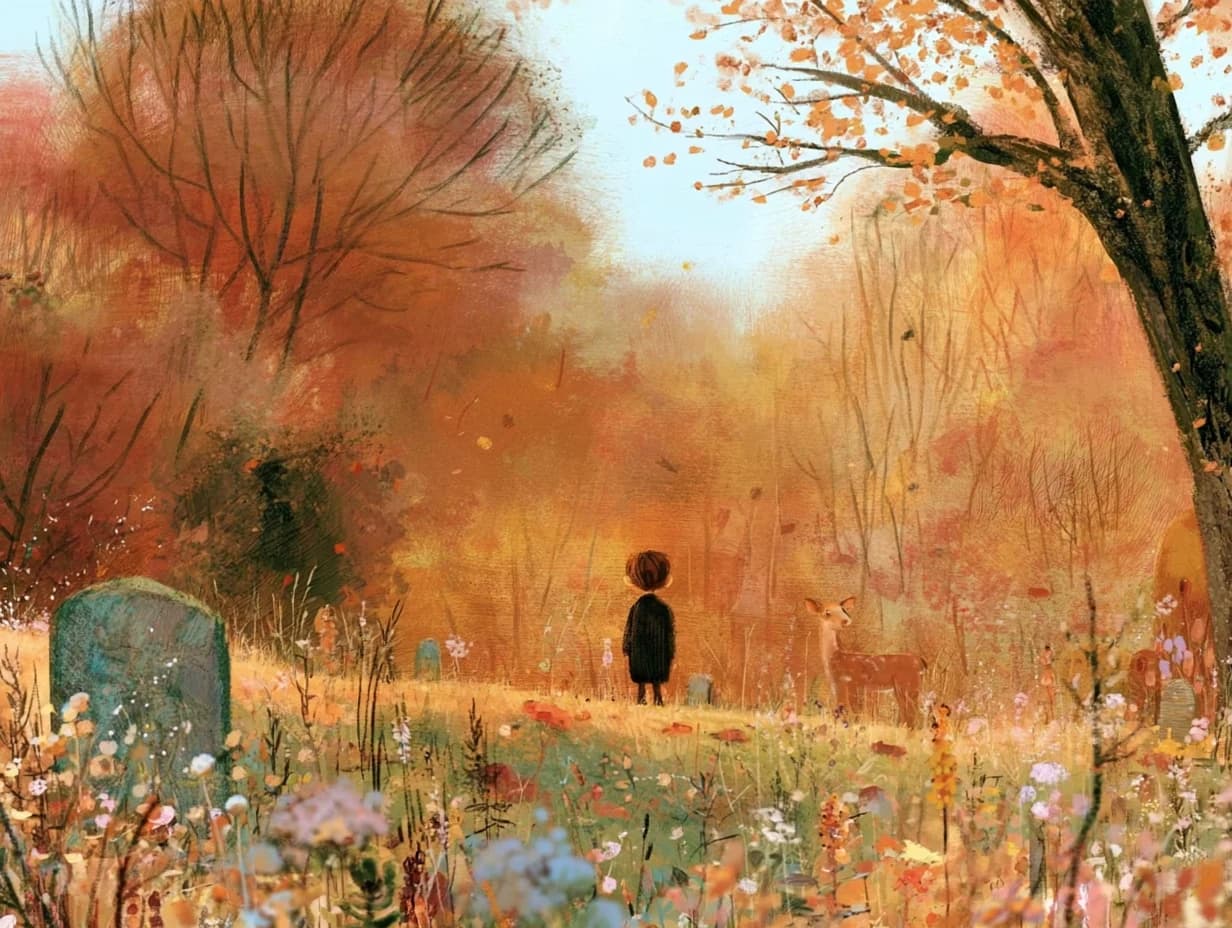
Autumn rehearses death every year. What trees, ancestral rituals, and the body’s own seasonal shifts can teach us about grief and letting go.
Everyone braces for the first year of loss. Almost no one warns you that year two, when the support fades and the numbness wears off, can hit harder.
A field guide to the grief that doesn't come with a script — miscarriage, estrangement, a second year that's harder than the first — and the research behind why each one goes unwitnessed.
Forgetting names, rereading the same email four times, blanking mid-sentence — grief brain is real, physiological, and rarely talked about at work. Here's how to function through it.
A vigil is staying with someone who is dying. A death doula on what it asks of you, how to hold one at home or in a hospital, and what to say.
There's a whole aisle of cards for a death, and nothing for an estrangement, a miscarriage, or a friendship that ended. Here's what to actually write, loss by loss.
Grief doesn't always look like tears. Sometimes it's a thick, disorienting fog — and a two-minute grounding practice for exactly those moments.
A green burial returns the body to the earth without embalming or a sealed vault. A death doula on how it works, how it compares, and what it gives the living.
Grief keeps colliding with expectations nobody fact-checked. Twelve real patterns in how grief works, each paired with the research or history behind it.
When someone you love is dying, there is still something you can do with your hands. A death doula on the herbs families have always brought into the room.
Naming the loss, the Anchor Object practice, and other concrete tools for grief that society never formally recognized in the first place.
Stregheria is Italy's folk-magic tradition, and its view of death is simple: the dead stay in the family. On ancestor altars, vigils and the rites of leaving.
"Am I a bad person for needing space from my grieving friend?" On secondary grief, compassion fatigue, and how to actually say you need a limit.
Pain isn't a malfunction — it's information nobody else can see. Understanding why evolution built us to hurt explains both the pain and why it goes so unacknowledged.
Miscarriage grief rarely gets treated as what it actually is — the loss of a whole imagined future, not just a medical event with a short recovery window.
On grief in summer: what the science actually says, and why loss feels louder when the world insists on being beautiful.
The diagnosis came in March. By May, your mother still looked like your mother, still made jokes at the dinner table, still asked about your kids. But something had already shifted in the room. You fe
Your chest is tight. You cannot take a full breath. You haven't slept through a night in three weeks, and when you do sleep, you wake at 3:47am with your jaw clenched like you have been fighting somet
A friend asked me what I do for a living last year, at a dinner party, in that tone people use when they already know you're about to make things weird. I told her I'm a death doula. She nodded polite