
I keep a small, hand-crafted cigar cutter on a shelf in my home. It belonged to my Nonno, from Brescia, Italy. I don't use it. I keep it, which is an entirely different thing. Heirlooms are memory made physical: the old understanding that the dead aren't entirely gone as long as someone still holds something of theirs.
I come by my interest in death, legacy and the liminal spaces between worlds honestly. Italian-American households, at least the ones I know, have always had a complicated, tender, sometimes fierce relationship with the dead. The candles on the mantle. The photographs. A grandmother's name, spoken at the table long after she's gone. That isn't morbidity. It's devotion.
It also has roots in a tradition many Italian-Americans may not know by name but will recognize in practice: Stregheria. Italian folk magic. The old ways. La via vecchia.
Its view of death is simple, and it's the reason I'm writing this. The dead stay in the family.
What Is Stregheria?
Stregheria ("the craft of the strega," or witch) is the indigenous folk-magical tradition of Italy. It's rooted in pre-Christian folk religion and woven into the rhythms of the natural world, the agricultural cycle, and the ever-present reality of death and rebirth. It isn't a monolith. Practices varied dramatically by region, and the Stregheria of Sicily looks and feels different from that of Naples, Calabria or the north. But certain threads run through all of it.
Death, in this tradition, isn't the opposite of life. It's its completion. Birth, life, death and return is a sacred, constant cycle. The dead remain part of the community. They have wisdom and influence, and they deserve ongoing relationship, respect and ritual attention.
Stregheria vs. Wicca: What's the Difference?
People ask me this constantly, and it deserves a straight answer. Stregheria is not Wicca. Wicca is a documented 20th-century religious movement, formalized in England in the 1950s, that many practitioners have since shaped into countless personal and eclectic paths. Stregheria is older and more local: a regional Italian folk-magic inheritance, carried through families and villages rather than founded by any one person, and tied to Italian ancestor veneration, the agricultural calendar and the folk Catholicism it grew up beside.
The overlap is real. Both honor the natural world and the turning year, and modern Stregheria has absorbed some Wiccan structure over the past few decades as practitioners looked for shared language. But where Wicca tends to be initiatory and comparatively new, authentic Stregheria is inherited, regional, and inseparable from a specific lineage of place: your grandmother's kitchen, not a coven you joined.
Ancestor Veneration in Italian Folk Tradition
Long before All Saints' Day and All Souls' Day were Christianized in Italy, the Romans observed Parentalia and Lemuria, festivals for honoring and appeasing the spirits of the dead. The folk practices that survived centuries of syncretism carried those older impulses forward in new forms.
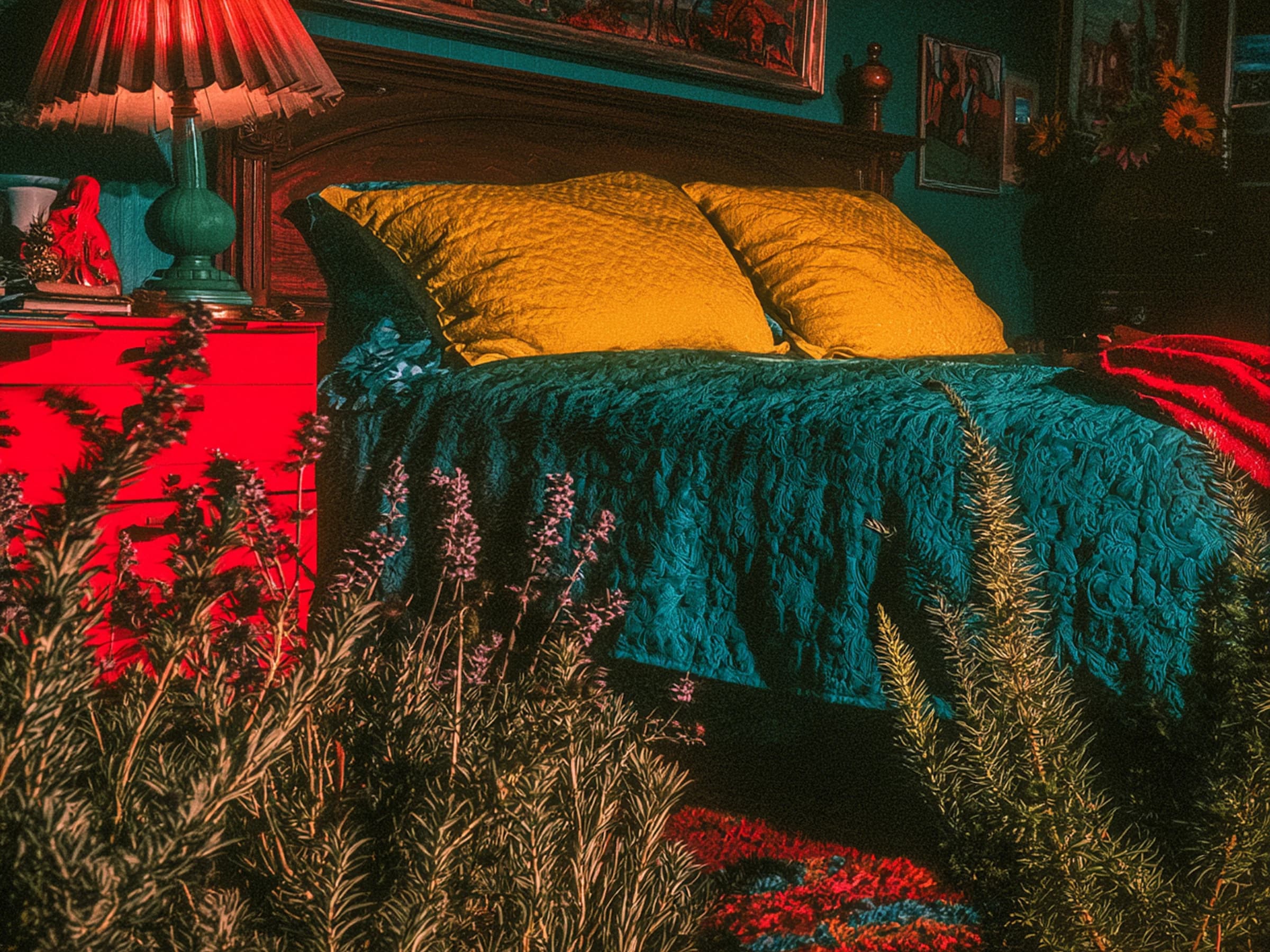
In southern Italian tradition, the home altar, often built on a mantle, a shelf or a small table, wasn't purely a Catholic practice. It was also a space for the dead. Photographs, personal objects, candles, food offerings and water (to quench the thirst of spirits traveling between worlds) were placed there for departed family members. The dead were spoken to. They were asked for guidance. Their intercession was sought in moments of crisis.
This wasn't a practice of fear. It was a practice of continuity. The family didn't end at death. It deepened and carried on in a different form.
How to Set Up an Ancestor Altar
The tradition is more forgiving than it looks. A few pieces, gathered with intention, are enough:
- A dedicated surface. A mantle, a shelf or a small table set apart from everyday clutter. That separation is what makes it an altar rather than a display case.
- Photographs of the dead you're honoring. The anchor of the whole practice. Everything else supports it.
- A candle. Lit when you visit, to mark that you're present and speaking to them.
- Water. Traditionally left to quench the thirst of spirits traveling between worlds. Refresh it regularly. Don't let it go stale.
- Food offerings. Bread, wine, or something the person loved, left at the altar or at the threshold of the home to nourish the spirit in transition.
- A personal object of theirs. A piece of jewelry, a tool, something like the cigar cutter on my own shelf: physical memory, kept rather than used.
Then speak to them there. Ask for guidance. Tell them what's happening in the family. This is the part people skip, and it's the part that matters most.
The hard part is the photographs. A shoebox of pictures and a bare shelf freeze most families, and nobody knows where to begin gathering a whole life onto one surface.
Fill the Frames Together
People benefit from having a structure when they gather a life onto an altar, especially in the last weeks. Going through photographs together and filling the frames is one of the most meaningful things a family can do, and if the person is still alive they can tell you who is in each picture.
I recommend using something like a one-page collage with named frames: their portrait, a childhood photo, a favorite place, a milestone, a favorite memory, and room for their own handwriting. The names do the thinking, which keeps it straightforward. Print it, glue the photographs in and write the details around them. It becomes the centerpiece of the ancestor altar, a display at the vigil or the memorial, and something to keep afterward.
If you would like to try this method, you can download the collage here:
Italian Funeral Customs and the Vigil Tradition
Traditional Italian and Italian-American funeral customs grow from the same impulse toward continuity and communal mourning. Before funeral homes, death happened inside the home, and the community managed the rituals around it, often the women.
The veglia, the vigil, was held at home with the body present. Neighbors and extended family gathered, not only to pay respects but to keep the deceased company in their transition and to keep the bereaved from being alone in their grief. Food was brought. Stories were told. Prayers were offered, some Catholic and some much older. Keening, the vocal expression of grief, was expected and accepted, not suppressed.
The dying and the recently dead were understood to exist in a liminal space, not fully here and not yet fully transitioned. The vigil was, in part, a protective and supportive act: holding the space steady, helping the spirit complete its journey, and making sure it was seen and honored on its way.
The Strega as Death Keeper
In Italian folk tradition, the strega, the wise woman of the village, was often the one called at the threshold moments of life: birth, illness and death. She knew the herbs. She knew the prayers, many of which weren't entirely Christian regardless of what they were called. She knew how to lay out the dead, how to read the signs, how to help a family through the practical and spiritual landscape of loss.
Some feared her. Others trusted her deeply. Her knowledge of death was inseparable from her knowledge of life, and knowing how to tend the dying was understood as a form of power: not dark, but necessary. Liminal. Charged.
I think about her often in my own practice. I'm not a strega in the traditional sense, but I recognize the lineage in what I do: sitting with the dying, helping families through the passage, holding the space so that what needs to happen can.
Protective Rituals for the Dead and the Living
Italian folk magic carries a rich set of protective rituals around death, meant to let the dead rest peacefully and to shield the living from grief's more destabilizing edges.
- Mirrors were covered or turned to the wall in the home of the deceased, both to keep the spirit from becoming trapped and to protect the bereaved from a reflection that might invite the spirit to linger.
- Salt was placed at doorways and sometimes beneath the body, a centuries-old protective practice meant to keep negative influences from entering with the grief.
- Red thread and iron served as protective charms in some traditions: iron to repel spirits that might take advantage of a vulnerable household, red thread as a binding and grounding element.
- The cimaruta, a traditional Italian folk charm shaped like a sprig of rue, was sometimes placed near the deceased as a protective talisman. Rue has long been associated with both death and protection in Italian herbalism.
- Food offerings, especially bread, wine and sweets, were left for the dead at the threshold of the home or on the altar, to nourish the spirit in transition and honor a relationship that continued beyond death.
La Festa dei Morti: The Feast of the Dead
In parts of southern Italy, Sicily in particular, the Feast of the Dead on November 2nd wasn't a solemn occasion. It was a celebration. Children woke to find gifts left by their deceased relatives: candies, cookies shaped like bones and skulls, small toys. The dead were understood to walk close that night, and their visit was welcomed with joy, not dread.
This is the tradition I find most beautiful and most clarifying. It says something fundamental about how the living and the dead relate: not separation and loss, but ongoing connection and love. The dead remain part of the family. Their presence is cause for celebration.
What the Old Ways Offer Us Now
I'm not arguing that everyone needs to adopt these specific practices. Traditions aren't one-size-fits-all, and I'd be the last person to suggest they are. But the philosophy underneath, about death, offers something countercultural and healing in a society that has largely turned away from dying.
When death isn't a rupture but a transition, the rituals around it shift. The focus moves from denial and speed, how quickly we can get back to "normal," toward presence, meaning and continuity. The dead aren't erased. They're held. Their stories continue.
The strega knew this. Your nonna probably knew it too, whether she had a word for it or not.
Stregheria is one thread of a wider inheritance: see the full guide to nature-based and ancestral death care for vigils, green burial and deathbed herbalism too.
If this resonates, whether you're drawn to death literacy, to intentional end-of-life planning, or to honoring your own ancestral traditions around dying, I'd love to talk. My door is always open, and I promise I won't flinch.
Start small. Find a photograph, clear a shelf, light a candle, and say their name out loud.