A green burial is a burial without embalming chemicals or a sealed vault. The body is laid in the earth in something that breaks down: a shroud, a wicker basket, plain wood, a tree pod. It's also called natural burial, and it's how nearly every culture buried its dead until a few generations ago.
There's a moment, when someone we love dies, when the world hands us a stack of decisions we were never taught how to make. They arrive fast, wrapped in the assumption that there's only one way to do this: a casket, a vault, a chemical process out of sight, a body we're quietly discouraged from touching again.
For a lot of people, that version never quite fits. It feels like something being handled rather than honored. If you've stood in a funeral home and felt that mismatch, like the person in front of you was being processed instead of loved, you weren't being difficult. You were noticing something real.
Green burial is the one that fits. I think it's the right answer for most families, and here's how it works, how it compares, and what it gives the living.
What a Green Burial Looks Like, Step by Step
Green burial is a burial where the body is not embalmed and is laid to rest in something that returns to the earth. This is the whole sequence the way I hold it:
- Before. The dying person is often unclothed, just a sheet or a light blanket over them, wherever they're most comfortable. They want to leave as naturally as they arrived.
- The washing. After death, the body is washed with salt, lavender petals and crushed herbs, then covered with a poultice. Not to preserve anything. It's one more act of tending before the body goes back to the ground. We use oils and cocoa butters because they break down in the earth and won't harm the creatures that will eventually do their work.
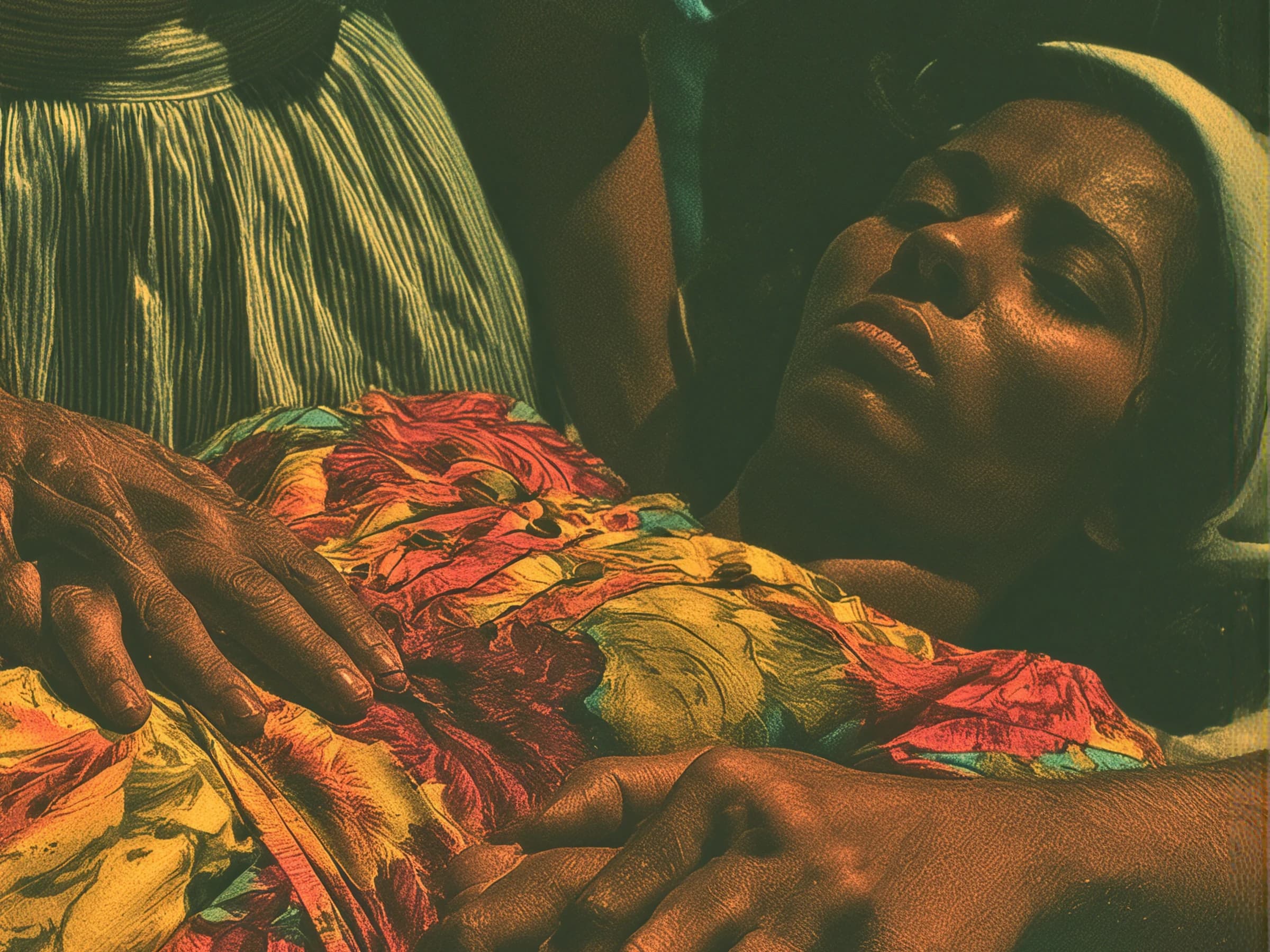
- The shroud. The body is wrapped in oils and a shroud and laid out for up to two days. People come. They keen, they scream, they cry, they sing, they eat, they dance. The person is still here, and still part of it.
- The burial. The ground is opened and the body is placed in it, directly or in a handwoven wicker basket, scrap wood, a shroud or a tree pod. Then the earth goes back over.
- The ring of stone. A circle of stones is laid around the grave to mark it as sacred ground, a space nothing can enter that would harm the body or the spirit.
- The feast. More dancing, more song, more keening. Then a table of everything the person loved to eat, with one of the fullest plates and a full cup left at the end of it, because that one is theirs. Another plate is set outside at the foot of the grave for the ancestors, so they have food for the journey when they come to collect their own.
No concrete vault. No chemicals designed to stop the very thing bodies are meant to do. The person is placed in the ground and allowed to become part of it again.
It isn't fringe, and it isn't new.
Green Burial vs. Traditional Burial vs. Cremation
The short version:
- Traditional burial usually embalms the body and seals it in a concrete vault, which slows decomposition.
- Cremation skips burial and embalming, but has its own carbon footprint.
- Green burial embalms nothing and vaults nothing, and lets the body return to the soil the way it always has.
For a state-by-state breakdown of legality, cost and where to find a green cemetery near you, we've put together a practical guide.
Green Burial Is the Old Way, and the Right One
We tend to talk about green burial as a trend: modern, eco-conscious. It is those things. It's also reclaiming our ancestral rites, and that matters more. Your great-great-grandmother was almost certainly buried this way, and so was hers. Families washed and wrapped their own dead, dug the grave, carried the body and filled the earth back in with their own hands. Death was a village act, not a private transaction handled by strangers.
Somewhere along the way we handed all of that over to hospitals, funeral homes and professionals who do important work but can't replace us. We handed over our permission to be part of the rite. Green burial quietly gives it back.
What Happens to the Body
A body returned to the earth without embalming chemicals or a sealed vault decomposes. It does what living things have always done. It feeds the earth. It becomes soil, then root, then the growth that comes after. Conventional burial seals the body away from that process, and cremation, for all its convenience, carries a real carbon cost. Green burial has neither problem. It's measurably the method most beneficial to the planet.
Our ancestors did green burial without the vocabulary of carbon or decomposition. They watched the garden take back what the season gave it, and they understood. Nature is a cycle, and our deaths play a part in it.
What Green Burial Gives the Living
For the families I sit with, the deepest gift of green burial is rarely the ecology. It's what they get to do with their hands. They help carry. They help lower. They place a handful of earth, or a sprig of something meaningful, and know they were part of the last tending. Grief has somewhere to go when the body isn't hidden from us. Something in us settles when we're allowed to take part in the goodbye instead of watching it from a distance.
That's the medicine. Not the shroud, not the absence of a vault. The presence, and doing the thing yourself.
The practical problem is that most families don't know what taking part looks like. They want a role before the burial and have nothing to put in their hands.
Give Grief Something to Plant
People benefit from having something to make with their hands before a green burial, especially family and guests who want to take part and don't know how. Without a job, grief has nowhere to go.
I recommend using something like seed packets and a set of botanical stencils. Each guest takes a packet home and plants it, so the person is carried forward in something living, and the family decorates the shroud or casket together before the burial. Planting notes are printed on every packet, with space for a name and dates, which makes it straightforward. Each one is cut, folded, glued, filled with seeds and closed with a tucked flap, so print a stack ahead of time. Many green-burial grounds ask for natural, non-toxic materials, so check with yours before you decorate a shroud or casket.
If you would like to try this method, you can download the seed packets and stencils here:
Is Green Burial Legal Where You Live?
Green burial is legal in every US state. The rules on where you can do it vary a lot by state and county: a dedicated green cemetery, a hybrid section of a conventional cemetery or, in a handful of states, private land. Finding those answers is part of what I help families do. Our full guide to green burial options in the US walks through the state-by-state basics if you want to start there.
Why I Wrote It Into My Will
I'll tell you where I land, since I'm asking you to consider it.
When I was twenty-seven I went in for exploratory brain surgery. Beforehand I wrote a one-page will. The first line wasn't about money or the house or who gets what. It said: please don't let them put me in a box.
I didn't have the research then. I didn't know the laws, or what a conservation cemetery was, or that any of this had a name. I just knew I wanted my body to go back to the earth, and I knew it well enough to make it the first thing I wrote down.
If you're drawn to this, listen to that. It usually means you already sense there's a more honest way to say goodbye, and you're looking for someone to walk you toward it.
Whatever you decide, say it out loud to the people who will carry it out, and write it down. I did it at twenty-seven, on one page.
Green burial is one piece of a larger inheritance. See the full guide to nature-based and ancestral death care for vigils, deathbed herbalism and ancestor rites. If someone you love is dying and wants this, or you want it for yourself, I sit with families on exactly this decision.