There has always been something about the desert that makes death feel closer. Maybe it is the heat. Maybe it is the silence. Maybe it is the bones the desert holds onto. The way it strips away what is soft and leaves behind what can endure.
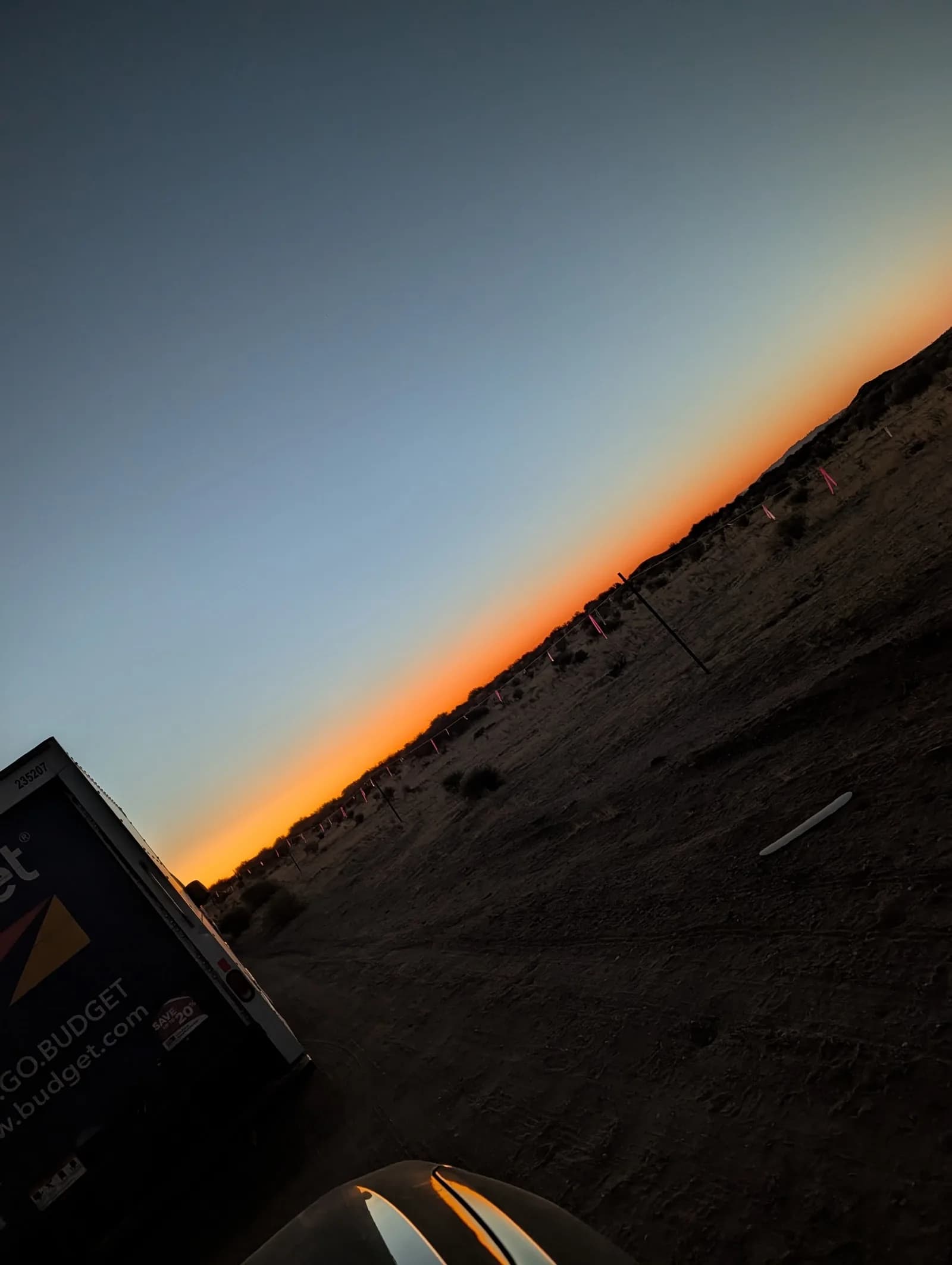
Here I am, five days in the Mojave Desert. No running water. No electricity. Dust everywhere, temperatures pushing into the hundreds. In the heart of the landscape of death, and thousands of people dressed as though the world had already ended, having a party.
This is Wasteland Weekend, the largest post-apocalyptic festival on earth.
I went expecting the costumes, cars, spectacle, and dust. But I wasn’t expecting the questions about death, grief, ritual, and community that came swirling in my mind. Like for one: aside from it being fun, why have we come out to the landscape of death to think about the end of the world, what comes after the end, and make it a celebration?
Wasteland Weekend and the Impulse for Community
Let’s talk a bit more about the impracticality of this venue. There are no convenient little systems waiting to take care of everything for you. You have to bring your water. You have to think about shelter. So what happens when thousands of people are temporarily removed from the infrastructure we normally depend on?
Humans do what humans have always done when faced with uncertainty. We make ritual.
We give things names. We create traditions. We gather in certain places. We dress differently. We tell stories about who we were and who we have become. We create symbols and ceremonies and little ways of marking the passage from one thing into another.
Wasteland Weekend is obviously a festival, but underneath all the costumes and elaborate vehicles is something much older. People are participating in a shared story about survival, and they are giving themselves permission to step outside of ordinary life for a while. It’s an opportunity to engage in ritual.
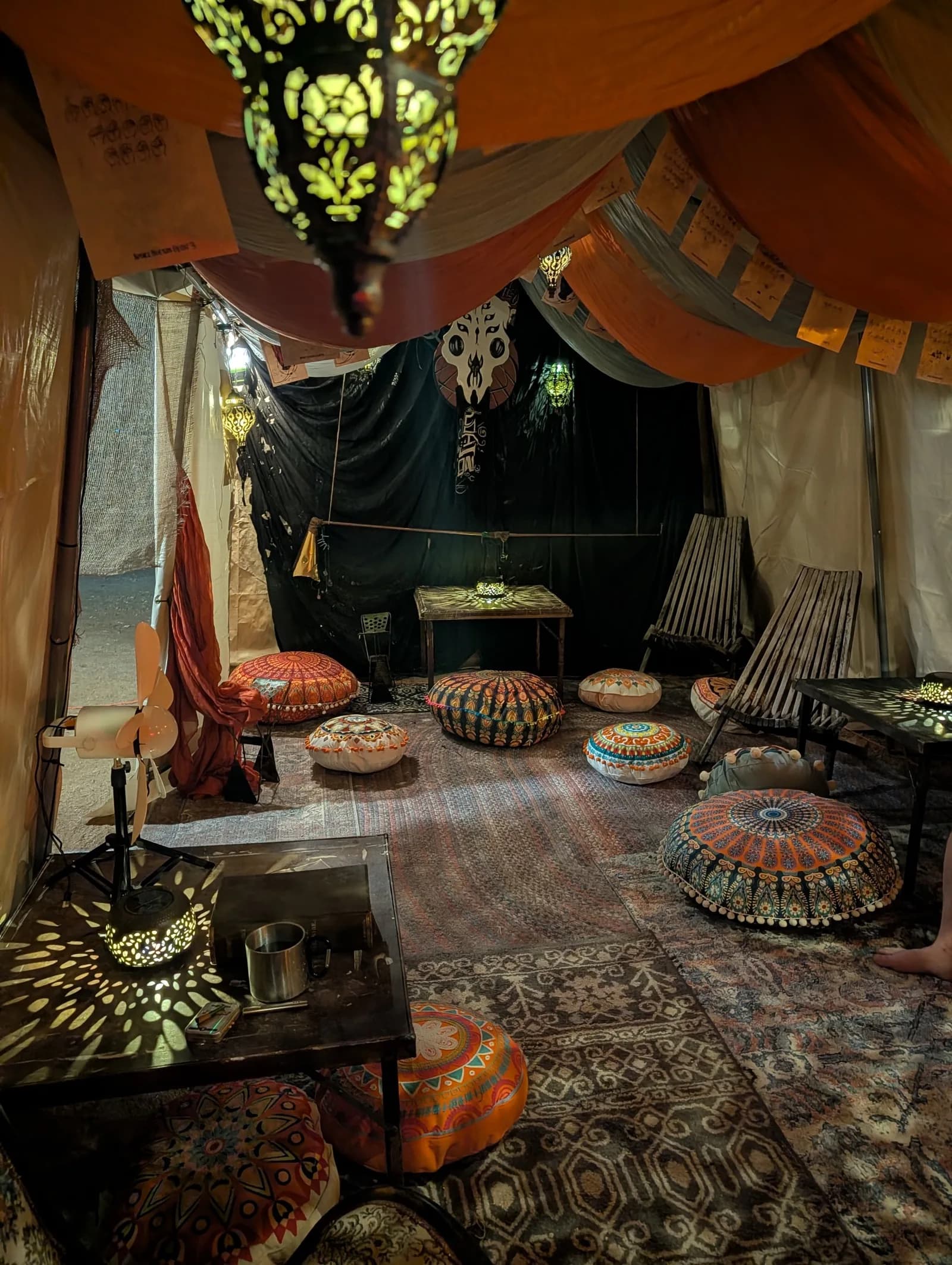
So we come all the way to the desert to engage in ritual. Why is the ritual so important that we do that?
Why Modern Grief Demands Ritual
Rituals aren’t just old-fashioned or ceremonial, we use them constantly when faced with death. Lighting a candle? Why didn’t you just turn on the light? Because it’s a ritual. Flowers? That’s a ritual. Wearing black? Why not pink? That’s a ritual. Gathering around someone that died? Cooking someone’s favorite meal after they died? Saving their handwriting, photographs, clothing, telling their stories? All rituals. And you wouldn’t think they are. Because they seem like the natural thing to do.
Rituals of death are functionally done because grief is enormous and usually doesn’t come with instructions. Ritual gives us something to do with our hands when our hearts don’t know what to do. It gives shape to something that otherwise feels shapeless. It tells us that something has changed, that the person we were before this moment is not quite the person we are afterward.
And it’s about doing it with others, being witnessed, being reminded that you are part of something bigger. That even when death occurs, the party still continues.
I think that is part of what I found so interesting about the people at Wasteland Weekend. The urge to create community wherever we go, even the most temporary of stays we build a little universe around us, is hardwired in us. The people creating this temporary world are largely strangers. They arrive from different places, with different backgrounds, and yet within moments of arriving, they begin creating something that resembles a community. Camps share resources. People look after one another. Someone notices when another person is exhausted. Someone has water. Someone else has a skill that someone needs. No one needed to tell them how to behave. People simply start doing what people have always done when they understand that survival was never meant to be a completely individual endeavor.
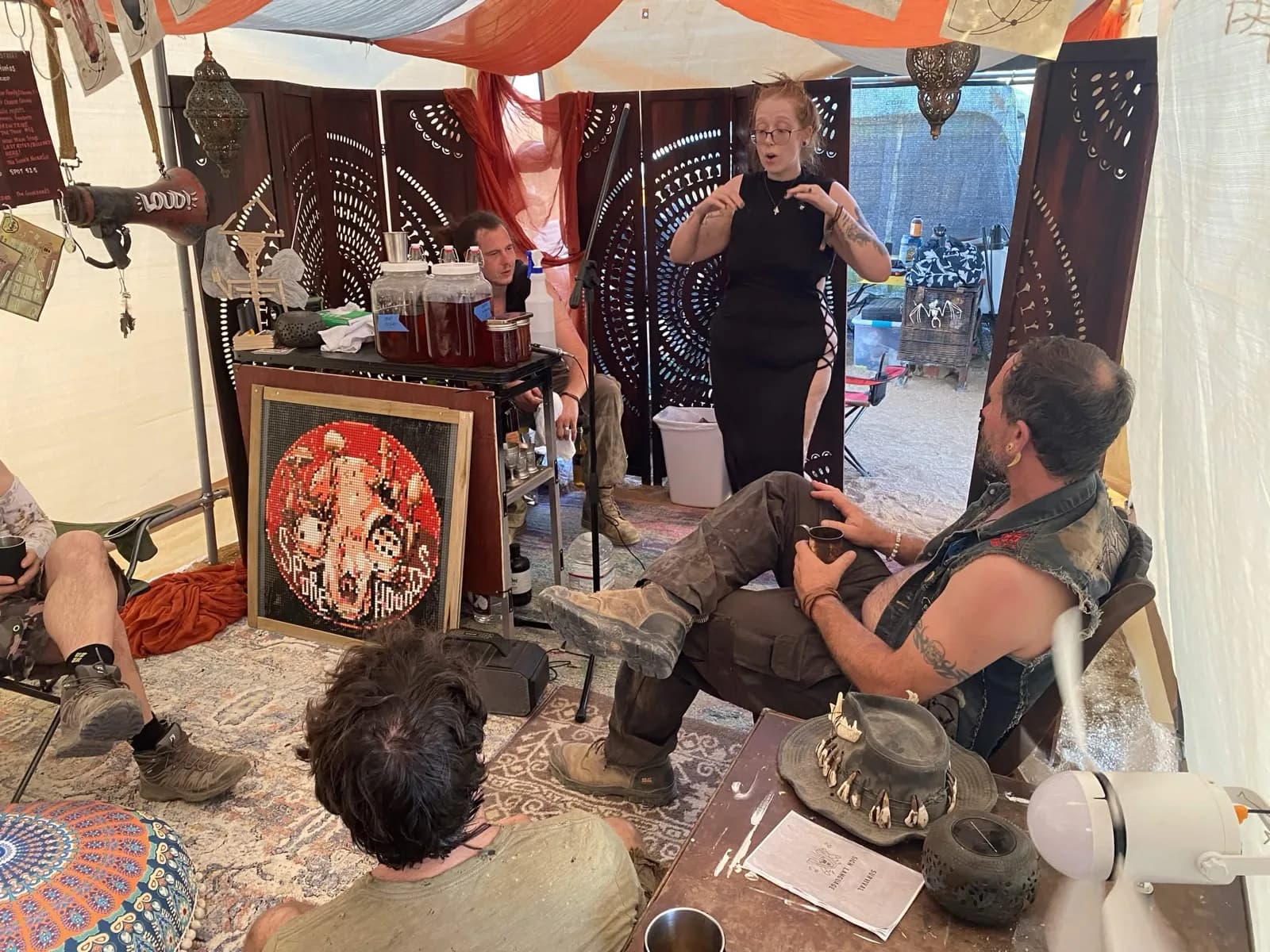
For most of human history, we knew community and death went hand in hand. You knew the people who lived around you. You knew who was sick. You knew who had lost someone. You knew where the dead were buried because you may have helped put them there. Death wasn’t necessarily something that happened behind the closed doors of a hospital or funeral home, far removed from the rest of the community. It was something the community experienced together.
I don’t think modern death care is a bad thing. Hospitals, hospice, funeral homes, crematories, and all the people who make those systems work provide incredibly important services. But I do wonder sometimes if we have become so accustomed to handing death over to professionals that we have forgotten how much we are capable of doing ourselves, so as a result we never do it ourselves, and instead go to the desert and act out death rituals for the world.
Has our detachment from organic death rituals pushed us to seek out a proxy, a simulated end of the world where we can practice them instead?
Post-Apocalyptic Fiction as Modern Mythology
Maybe the societal disconnect between us and death is another reason post-apocalyptic stories have such a hold on us. Mad Max, Fallout, The Road, The Last of Us. We tell ourselves these are stories about the end of the world, but underneath the ruined buildings and scavenged supplies, we are asking questions about death.
Even back in time, asking these questions to ourselves directly was hard, so we would ask them vicariously through mythology. We used to tell stories about journeys into the underworld, about death and rebirth, about people crossing rivers or entering forests or descending into darkness and returning changed. We created myths because we needed a way to understand subjects where ordinary language stopped working.
Post-apocalyptic stories are our modern mythology. The robes have been replaced by leather and goggles. The underworld has become a wasteland. The monsters have become irradiated creatures or raiders. But the function hasn’t changed. They are stories that help us digest pieces of understanding of subjects bigger than ourselves, begin to answer questions with no clear answer, explore the grief within ourselves.
This is the question myth has always asked, and post-apocalyptic fiction still does: what remains when everything else falls away?
The Road is structured around what a father and son can physically carry in a cart. Fallout and Mad Max are both built around scarcity and salvage, characters defined by what little they hold onto once everything else is stripped away. The myth is dramatized through possession and loss of possession.
Because both classic mythology and post-apocalyptic fiction grapple with what remains, both are fundamentally stories about grief.
Who We Become: Apocalypse as Katabasis
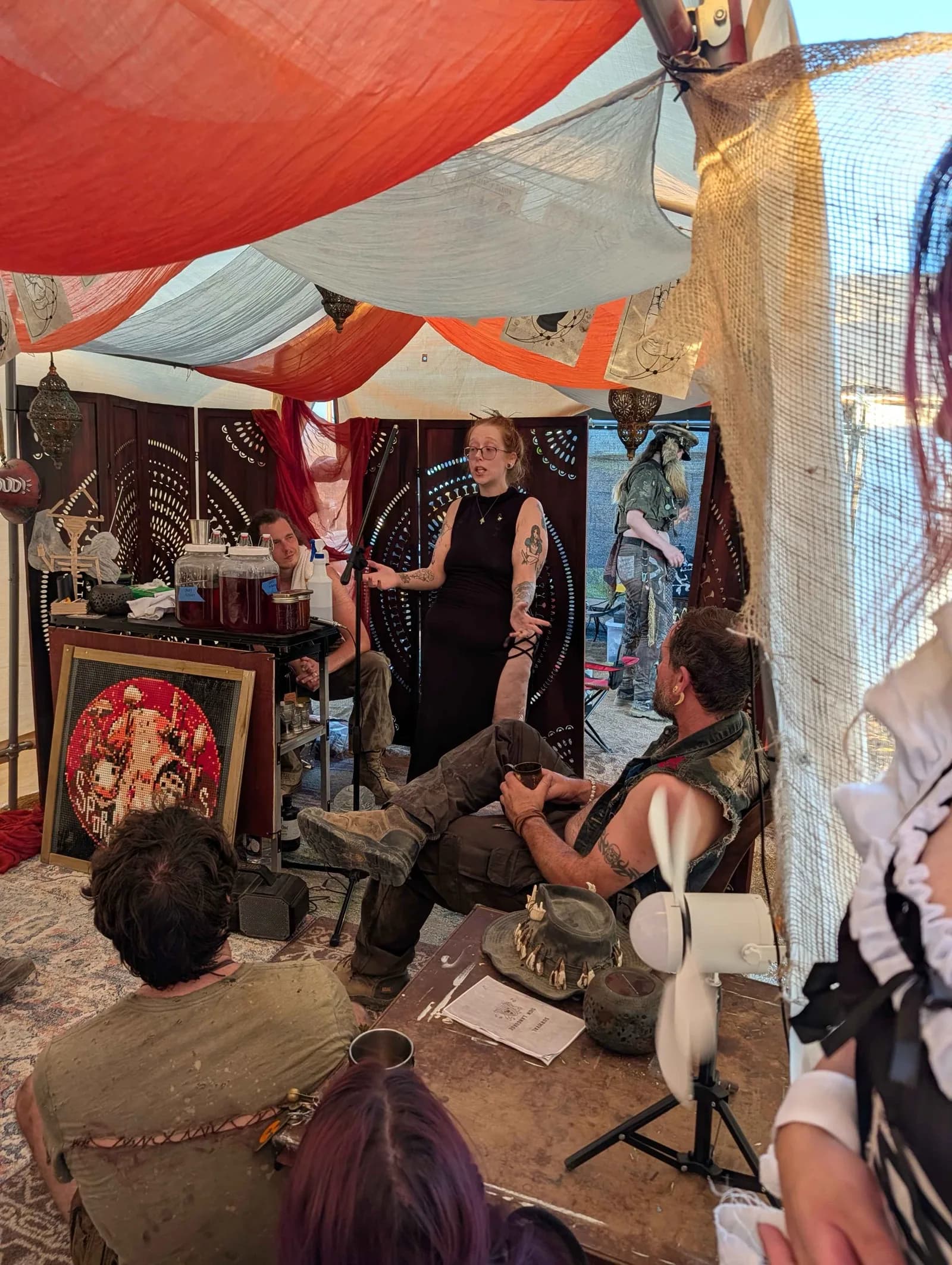
Here’s what I think is actually happening at Wasteland Weekend, underneath the costumes. Nobody is really cosplaying the apocalypse. They’re cosplaying themselves, the version of themselves that would exist on the other side of it.
That’s a different thing to be fascinated by. It’s not “what would the world look like after everything collapsed.” It’s “who would I be.” And I don’t think that fascination is morbid. I think it might be one of the most hopeful things we do.
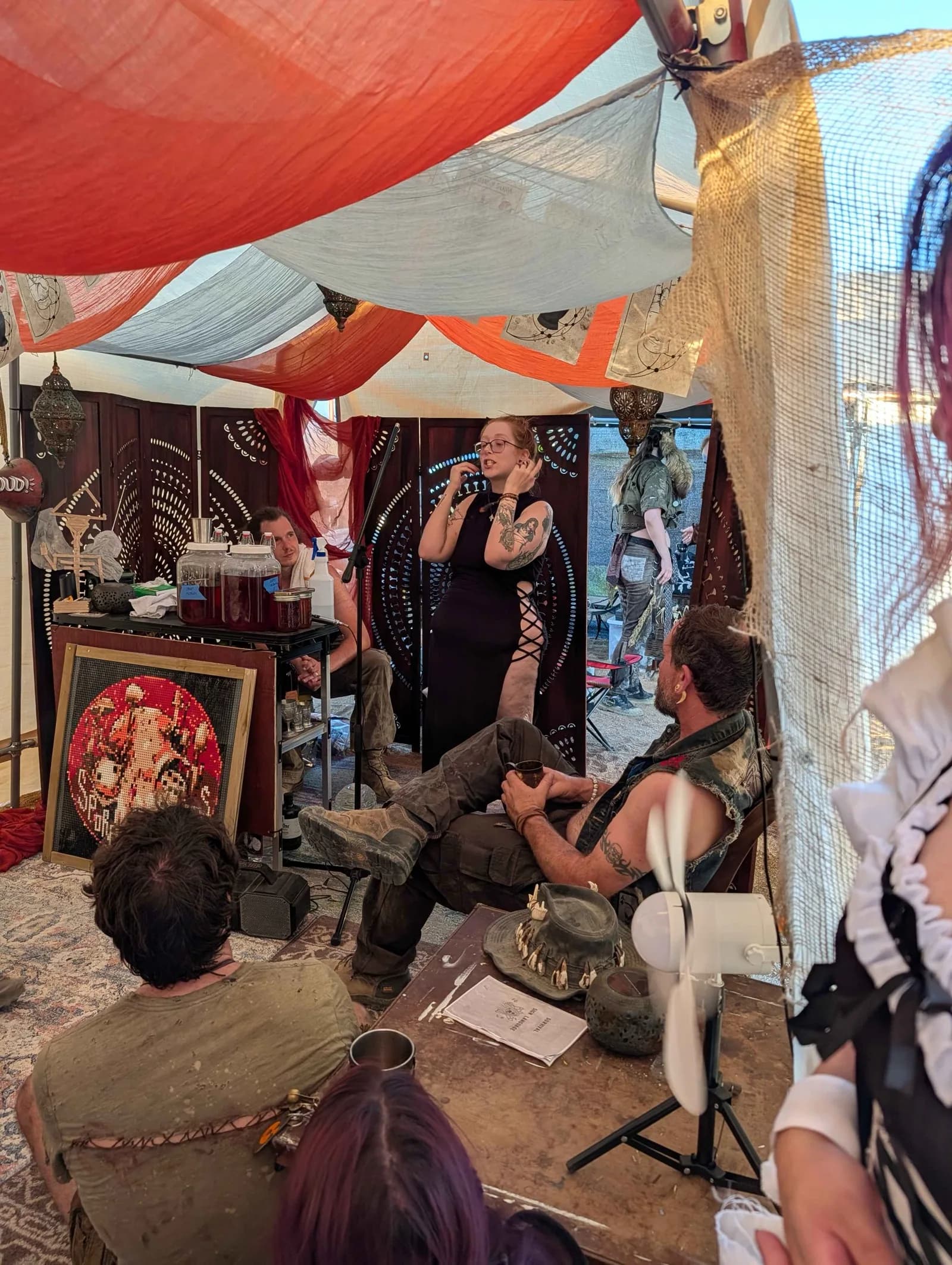
Because notice what version of ourselves we actually reach for. Nobody fantasizes about the end times and imagines becoming crueler, lonelier, smaller. We imagine the opposite. We imagine a world where you have to rely on the people around you to survive, and something in us gets almost giddy at the thought. Stronger. Kinder. More attuned to each other, because attunement stops being optional and becomes the thing that keeps you alive. We are picturing our best selves, and the thing that produces them, in the fantasy, is loss. Total, forced, unavoidable loss.
We’ve told this story before. Long before Fallout, before Mad Max, there were myths about going down. Orpheus into the underworld. Persephone dragged beneath the earth for half of every year. Odysseus, Aeneas, all of them making the same descent, into the dark, into the place where the ordinary rules stop applying, and all of them coming back changed. Not punished. Changed. The descent was never the point. The virtue you carried back up with you was the point. That’s what katabasis actually means as a story shape: you go to the bottom on purpose, because the bottom is where the transformation happens, and there’s no shortcut to it that doesn’t go through the dark first.
I think that’s the actual appeal of the apocalypse fantasy. It’s a katabasis with the training wheels still on. We get to imagine the descent, and the community, and the better selves waiting on the other side of it, without anyone actually having to die first.
Here’s what worries me. We quarantined death behind hospital doors and funeral home walls, and in doing that, I think we quietly took away the one outlet that used to hand us this exact transformation for free. You didn’t need a festival in the desert to be forced into community and changed by scarcity and grief. Death used to do that automatically, because it happened in your house, among your people, and it asked something of everyone in the room. We’ve engineered a world where that asking almost never happens to you directly anymore. So we go build simulations of it instead, in the desert, in fiction, because some part of us knows we’re missing the descent that used to come standard.
Which is maybe the real argument for looking at death instead of away from it. Not because staring at it is brave for its own sake. Because the self we’re clearly hungry to become, the kinder one, the more connected one, the one strong enough to hold other people up, isn’t waiting for us anywhere except on the other side of that look. You don’t cosplay your way there. You don’t rehearse your way there forever, either, though the rehearsal helps. Eventually you have to actually go down.
You are nature. And nature is not afraid.